






Debatia
Debatia: makes it more efficient and simpler to enhance the productivity of AI.
Tags:AI improves efficiencyWhat is Debatia?
Debatia is a real-time debate platform available on the web, developed by Toketa Inc.; it uses AI to match opponents, evaluate debates, and provide feedback on the results. Users can engage in timed arguments on the same topic from two different perspectives, either with players from around the world, friends, or AI opponents.
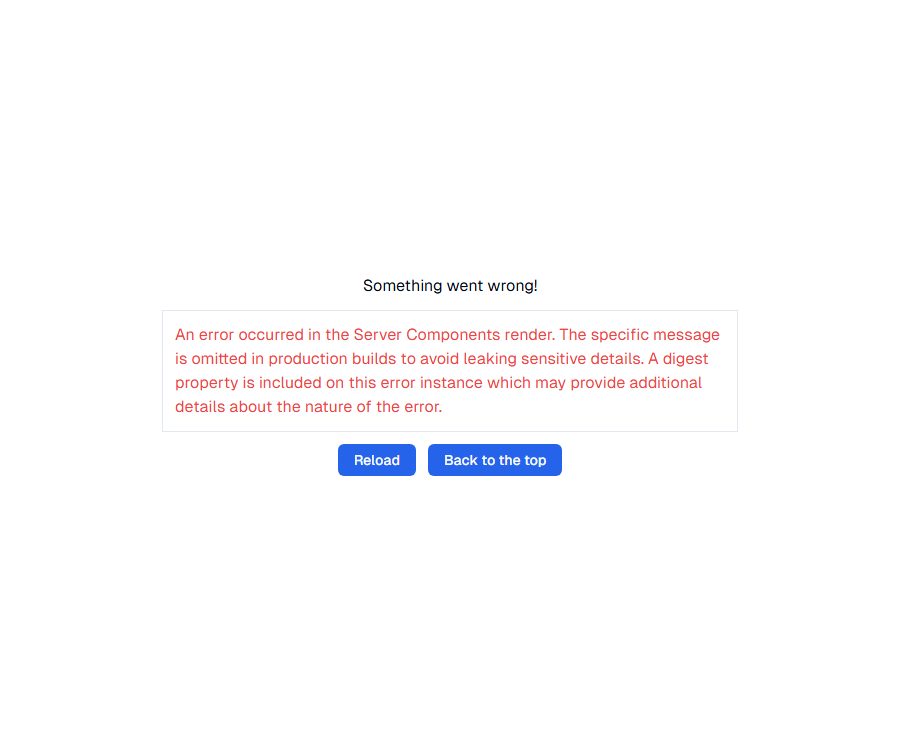
The platform supports 12 different interfaces and debate languages, and accepts input in text or voice form. The registration page is still accessible, but server rendering errors keep appearing on the homepage; as a result, the actual functionality for starting matches and engaging in debates may be unavailable for the time being.
Main functions
- Global matching: The algorithm uses the ratings from user debates to find opponents with similar skills, with the goal of reducing the disparity in matches between beginners and high-level players.
- Friends Match: After adding friends, create a room, select a topic from the available ones or customize one, and then invite specific people to join.
- AI battles: You can practice against AI opponents, with three difficulty levels – Easy, Medium, and Hard – making it suitable for training while waiting for a real opponent.
- Multilingual debates: Participants can use the 12 languages listed on the platform, thereby reducing language barriers in communication across different regions.
- Text and voice: It is possible to enter arguments directly, or record audio and have it converted into text; on mobile devices that do not have built-in recording functionality, the text-to-speech feature of the phone’s keyboard can be used.
- Structured rounds: The process separates Argument and Rebuttal; each side takes turns presenting its arguments and counter-arguments. Timings, surrender, or scoring outcomes all affect the status of the match.
- AI evaluation: After the debate, an evaluation system driven by ChatGPT determines the winner, the loser, or a tie, and provides a multi-dimensional assessment of the quality of the arguments presented.
- Ranking and history: The account allows users to view the rating, rankings, recent results, and game history, which helps in observing changes in long-term performance.
- Custom topics: Users can define the background of the topic, two opposing viewpoints, and colors, and set the accessibility level to public, visible only to friends, or visible only to themselves.
Battle mode
| Pattern | Opponent | Main settings | Suitable scenarios |
|---|---|---|---|
| Global Match | Real users worldwide | Match based on skill rating, and select questions and positions accordingly. | Competitive exercises and cross-lingual communication |
| Friend Match | Friends | Create a room and select a formal or custom topic. | Classrooms, communities, and peer practice |
| AI Match | AI opponents | Three difficulty levels: Easy, Medium, Hard | Arguments for independent training and testing |
Global matching may operate according to predefined opening hours; the page will indicate whether it is currently open and the time when the next match will start. If there are not enough opponents, the room expires, or there is a service error, users may not be able to start a match immediately.
Supported languages
| Language | Language | Language |
|---|---|---|
| English | Japanese | French |
| Danish | German | Spanish |
| Italian | Dutch | Portuguese |
| Russian | Swedish | Chinese |
Multilingual support does not mean that the quality of translation is identical in all languages. When dealing with slang, satire, specialized terminology, or regional policies, it is necessary to check whether the transcription and the model’s interpretation deviate from the original meaning.
How does AI assign scores?
| Dimension | Main observations | Score range |
|---|---|---|
| Creativity | Are the viewpoints and expressions original? | 1–10 |
| Logic | Whether the reasoning is coherent and whether the conclusions can be supported by the premises | 1–10 |
| Persuasion | The effectiveness of arguments in persuading the audience | 1–10 |
| Evidence | Are the facts, examples, and evidence sufficient? | 1–10 |
| Respect | Showing respect for the opponent and avoiding personal attacks. | 1–10 |
| Relevance | Does the content stay focused on the topic and the current counterarguments? | 1–10 |
| Clarity | Are the language and argument structure clear? | 1–10 |
| Consistency | Are the positions and reasoning consistent before and after? | 1–10 |
The AI score serves as feedback for training, but it does not guarantee neutrality or accuracy. The model can be influenced by the wording used, background knowledge, the length of the text, and security policies; therefore, for controversial topics, it is still necessary to rely on human judgment or the opinions of teachers.
Usage process
- Open the registration page to create an account and set the username and language, then verify that the homepage and the related services load properly.
- Choose between global matches, battles with friends, or battles against AI; in the AI mode it is also necessary to select a difficulty level, while for the friends mode you first need to establish a friendship connection and create a room.
- Choose from the official topics, or create a custom topic and fill in the background, the two opposing viewpoints, and the scope of application.
- After entering the debate, check your assigned position, present your main argument during the Argument phase, and respond to your opponent during the Rebuttal phase.
- Submissions can be made using text or via desktop recording transcription; each message should be no more than 300 characters long. Be mindful of the 90-second time limit and the maximum of 15 messages allowed.
- Wait for the AI to conduct the evaluation, to see the outcome – win, loss, or draw – as well as the comments and multi-dimensional scores; then review the historical records to identify the areas that need improvement.
Free status and usage restrictions
The current product description specifies that text, voice, and multilingual debates are available free of charge; there are no subscription options, points systems, or enterprise pricing plans. The fact that something is free does not mean it is available at all times – global matching is still subject to constraints such as operating hours, the number of people online, the validity period of the room, and the status of the servers.
- A single message can currently contain up to 300 characters; longer texts need to be compressed or split into multiple messages.
- The client is currently configured to handle a maximum of 15 messages, with a time limit of 90 seconds per session; the actual rules may change as the product is updated.
- Users can choose to surrender, and the match can also end immediately if either party runs out of time.
- Mobile devices cannot use the built-in recording function of the platform; instead, they must rely on text-to-speech via the keyboard or type manually.
- Server-side rendering errors keep appearing on the homepage, and a successful registration does not necessarily mean that one can proceed to the matching and review process.
Platforms, APIs, and open source
| Project | Current status | Explanation |
|---|---|---|
| Web application | It is available, but the homepage is unstable. | The registration portal is available; its main functions rely on a browser and online services. |
| Can be installed in web format | It exists. | The site provides a Web Manifest, but that does not mean it is a native mobile app. |
| iOS, Android, and extensions | Not confirmed yet | No official app store page or Chrome extension was found. |
| API and SDK | Not yet made public | There are no verifiable development documents or programmed methods for making calls. |
| Open-source status | No official open-source release was found. | No official GitHub repository or product license was found. |
Privacy, security, and content considerations
- The registration process makes use of third-party identity services for account authentication; users should use a separate password and activate the security features provided by those identity services.
- Debatia does not currently provide a verifiable public privacy policy; the details regarding account information, debate records, speech transcriptions, logs, and the deletion timeline are not clear.
- The terms of service, content moderation rules, age requirements, copyright permissions, and the ways in which training data can be used have not yet been made public.
- Do not provide your real name, contact information, school and class details, work-related confidential information, medical data, or materials related to unsolved cases in debates.
- Custom topic settings and visibility options for friend’s rooms cannot replace data protection measures; sensitive content should not rely on platform permissions for security.
- AI evaluations may produce inappropriate, biased, or factually incorrect comments; in educational settings, teachers should explain the limitations of the models and provide options for appeal or manual review.
Suitable for users and typical use cases
- Students and beginners in debate: practicing argument structure, counterarguments, the use of evidence, and speaking within a time limit.
- Language learners: They can train themselves to organize ideas quickly in the target language, but they need to check the accuracy of the phonetic transcriptions on their own.
- Teachers and clubs: Use friend rooms to organize matches on the same topic; AI scoring can serve as supplementary feedback rather than an official grade.
- Speakers, salespeople, and consultants: Practice handling objections, maintaining logical consistency, and delivering concise persuasive arguments.
- Interest communities: Exchange of different perspectives on topics related to life, technology, or public policy.
Capacity boundaries
- The homepage cannot be rendered stably at the moment; this is a practical limitation that must be taken into account before starting registration or organizing events.
- AI cannot verify the authenticity of all evidence, and it may also reward well-structured but incorrect arguments; users need to verify the facts on their own.
- 300 characters and a time-limited format are suitable for short debates, but not for thorough academic debates, lengthy chains of evidence, or formal competition formats.
- Real-person global matching depends on the number of people online at the same time; it may be difficult to find opponents for languages with low usage or during periods when the service is not available.
- Lacking a public API, native applications, and clear data policies, it is not suitable for organizations that need system integration or have to handle sensitive information related to participants.
Frequently Asked Questions
Is Debatia free?
The current product description specifies that it is available for free use; there are no subscription or point systems. Global matching may still be affected by operating hours, the number of users online, and the status of the service.
What battle modes does Debatia support?
It supports real-player matches around the world, friend rooms, and AI battles. The AI opponents are available at three difficulty levels: Easy, Medium, and Hard.
Can we debate in Chinese?
Yes, Chinese is one of the 12 languages listed currently. Users still need to verify complex terms and phonetic transcriptions.
On what aspects will AI conduct the scoring?
The current rating takes into account eight criteria: creativity, logic, persuasiveness, evidence, respect, relevance, clarity, and consistency; each criterion is scored on a scale of 1 to 10.
Can a smartphone be used to record debates directly?
The platform indicates that built-in recording is not available on mobile devices; one can use the voice-to-text function of the phone’s keyboard, or opt for text input instead.
Why can’t the homepage be opened?
There is an error in the rendering of server components on the current homepage, but the registration page remains accessible. This indicates that the service may be partially operational; it is recommended to try again later and avoid relying solely on it for activities at specific times.
Tools similar to Debatia



 Guigong Network Security Registration No. 45132202000164