






A one-sentence summary
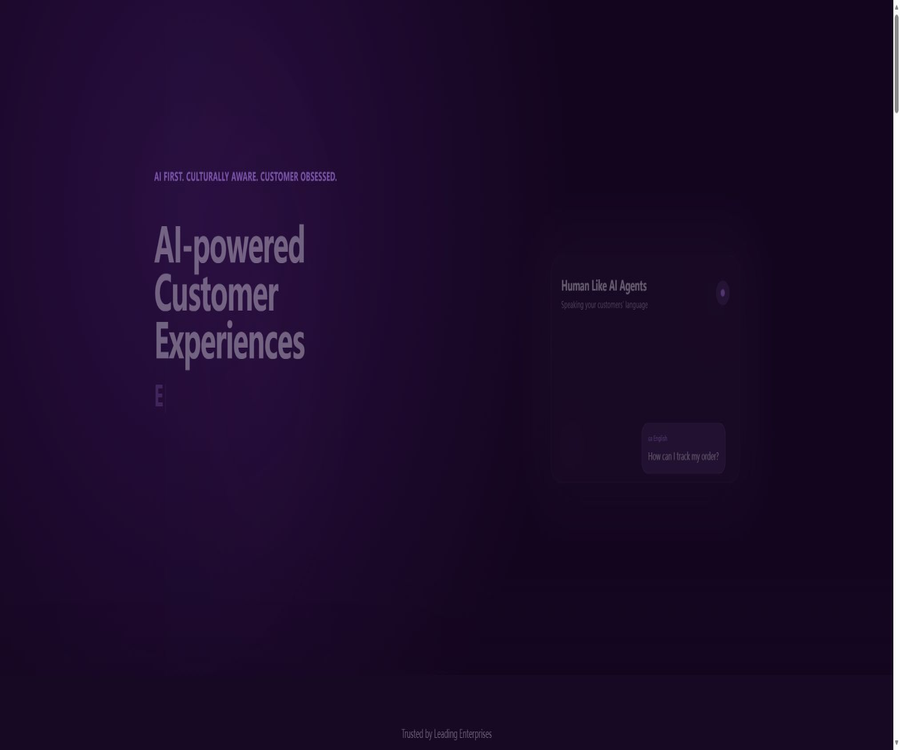
DOO is an AI customer service platform designed for corporate customer experience teams; it enables the creation of intelligent agents that conform to the brand’s tone of voice and local dialects, and it handles customer interactions across WhatsApp, social media, email, websites, and mobile applications in a unified manner.
Tool Introduction
DOO is operated by DOO Inc., with a focus on serving customers in the Gulf region and those who speak Arabic. The platform integrates AI agents, a unified inbox, code-free control options, automated processes, human intervention, and analysis dashboards into a single customer experience system.
It is not merely a web chatbot that answers common questions. Companies can enable agents to access knowledge bases, identify intentions and emotions, carry out authorized actions, and pass on the complete context to human teams in complex or high-risk situations.
Product composition
| module | Key capabilities | Suitable for tasks |
|---|---|---|
| AI Agents | Multilingual and dialectal dialogue, knowledge training, action execution | Automatically handle common inquiries and business requests. |
| Unified Inbox | Aggregate sessions, assignments, tags, and reminders from multiple channels | Customer service collaboration and ticket management |
| Control Tower | Configure personality, tone, dialect, knowledge, and feedback. | Managing and continuously optimizing AI agents |
| Analytics Hub | Real-time metrics, sentiment, journey, and predictive analytics | Service quality and business insights |
| Developers Hub | API, Webhook, and mobile SDKs | Connecting internal systems and embedded applications |
Main functions
Perception of Arabic dialects
DOO emphasizes an understanding of the Gulf dialects and other Arabic dialects, as well as their expressive habits and cultural context, rather than relying solely on Modern Standard Arabic. Companies should still have native speakers check the wording used in their brand communications, as well as the level of formality and the sensitivity of the expressions employed.
Branded AI customer service agents
Administrators can set the personality, tone, style of expression, and dialect of the agent, and then train it using a knowledge base and instructions. Once it is deployed, the responses can be continuously adjusted through human feedback and corrections.
Multimodal interaction
Agents can handle text, voice, images, and files, enabling customers to describe their issues in a more natural manner. Document recognition, image analysis, and voice understanding may still result in errors; high-risk outcomes should be verified manually.
Unified inbox across all channels
The unified inbox consolidates messages from WhatsApp, Instagram, Facebook, email, website chats, and mobile apps. Customer service agents can manage inquiries, leads, and tickets in the same workspace.
Intelligent allocation and prevention of duplicate responses
The system can automatically assign sessions based on employees’ expertise, online status, and customer type, and it shows whether other people are currently working on the same issue. Tags, categories, filters, and preset replies help keep the team consistent.
Automation and manual takeover
AI can handle repetitive inquiries throughout the day, identify intent and urgency, and escalate complex requests to the appropriate human staff. It preserves the context of the conversation during handovers, thereby reducing the need for customers to repeat their details.
Workflows and business actions
Companies can assign agents to query orders, collect customer information, or initiate processes within connected systems. For all actions that can be performed, it is necessary to define scope of authorization, approval criteria, and procedures for handling failures.
Customer profiling and lead management
The platform tracks, tags, and organizes customers or potential customers, and uses session history to facilitate subsequent follow-ups. Marketing and sales teams must ensure that the creation of customer profiles and automated outreach methods comply with local privacy and marketing regulations.
Emotion analysis
DOO can determine the mood and trends of a conversation in real time, which helps to adjust responses, handle complaints more effectively, and assess customer satisfaction. Emotional inference is not based on facts, and caution is especially necessary in situations involving dialects, sarcasm, or mixed languages.
Analysis and forecasting insights
Analytics Hub displays metrics such as response time, resolution rate, number of sessions, customer satisfaction, and the performance of AI versus human agents; it also allows for the creation of custom reports. Predictive analytics can help identify risks related to customer churn, additional purchases, and service issues, but it should not replace business judgment.
Complete workflow
- Confirm the scope of business, regions, languages, channels, data systems, and security requirements with the DOO team.
- Connect to customer service channels and import the approved knowledge base, processes, and brand language guidelines.
- In Control Tower, configure the agent’s personality, dialect, permissions, upgrade rules, and prohibited response areas.
- Real-world historical problems are used to test accuracy, action execution, emotional judgment, and human intervention.
- Launch first on a single channel or with a limited volume of traffic, while retaining manual approval and quality sampling.
- By analyzing dashboards and customer feedback, documents, instructions, and routing are revised, with automation then being expanded gradually.
Usage tutorial
Create the first AI customer service agent
- Schedule a demonstration and have the official team set up the corporate workspace, while defining the target use cases and success metrics.
- Select the language and dialect, and define the agent’s identity, tone, service boundaries, and conditions for transferring to a human agent.
- Upload products, policies, FAQs, and standard procedures, and remove outdated or conflicting content.
- Configure order processing, customer relationship management, or ticket system actions, and restrict access to sensitive operations.
- Create test sets for regular, ambiguous, complaint-related, and high-risk issues, and verify the responses and actions taken for each one.
- After releasing the content in small batches, check for unresolved issues, reasons for the upgrade, and customer feedback, and make ongoing adjustments.
Configure a unified inbox
- Connect to the required WhatsApp, social media platforms, email accounts, websites, and mobile application channels.
- Establish allocation rules for teams, skills, working hours, priorities, and customer types.
- Set labels, preset replies, reminders, upgrade deadlines, and service goals.
- Test whether the identities of the same customer across different channels are correctly combined, and verify the isolation of permissions.
- Enable anti-duplicate response and audit logging, then gradually migrate the old channels over.
Accessing APIs and Webhooks
- Obtain the API token from the workspace and store it only in a controlled server environment.
- Call the interfaces for the inbox, contacts, sessions, messages, or custom attributes as required by the business needs.
- Configure Webhook subscriptions for sessions, messages, and contact events.
- Verify the HMAC SHA256 signature of each event, and implement idempotent handling for duplicate deliveries.
- Control the request rate for each token, and carry out its replacement before the token expires after 90 days.
- Testing before going live includes timeout, retry attempts, insufficient permissions, data deletion, and manual rollback.
Which users are it suitable for
- Companies in the Gulf and Middle East & North Africa: need natural handling of inquiries from customers who speak Arabic dialects.
- Large customer service centers: Aim to integrate messages from various channels, as well as AI and human assistance, within a unified workspace.
- Retail, food service, and hotel teams: handle orders, reservations, as well as issues related to stores and members.
- Banks, insurance companies, and fintech firms: they handle inquiries related to accounts, payments, and claims settlement under strict access controls.
- Telecommunications, logistics, and educational institutions: require 24/7 response capabilities as well as automatic routing based on intended purposes.
- Development team: Integrate into existing products via API, Webhook, or mobile SDK.
Typical use cases
- The customer asks about the status of the order in the local dialect, and the AI retrieves the relevant authorized data and responds directly.
- Instagram campaigns generate a large number of private messages; the system automatically replies, collects relevant information, and passes it on to the sales team.
- Once negative emotions or high-priority complaints are identified, they are escalated to a human agent along with the complete context.
- Multi-channel conversations are consolidated into a unified customer view, preventing the team from responding repeatedly or failing to follow up.
- Managers can view response rates, resolution rates, and satisfaction levels by channel, language, agent, and service objective.
Price and procurement methods
As of August 2026, DOO’s official website does not provide any fixed package prices or self-service pricing tables; instead, it requires reservations for demonstrations and quotes are given based on the specific needs of the enterprise. Third-party estimates or past promotions cannot be presented as the current official prices.
| Purchasing items | Public price | Factors that may affect the quote | Suitable for users |
|---|---|---|---|
| DOO CX platform | Custom quote | Seats, number of sessions, channels, languages, number of agents, and analysis features | Corporate customer service team |
| Channel integration | Contact sales | Third-party communication costs such as those for WhatsApp, along with regional regulations | Multi-channel service organization |
| API and Webhook | Contact sales | Request volume, tokens, integration, and service commitments | Development and Platform Team |
| Mobile SDK | The SDK code is available; platform services are charged separately. | Number of applications, number of users, and scope of support | Flutter and React Native applications |
| Enterprise implementation | Custom quote | Knowledge transfer, system integration, security audits, and training | Complex or regulated by authorities |
Preparations before requesting a quote
Companies should first calculate the number of monthly sessions, peak concurrent connections, channels used, different dialects, the number of human agents available, the volume of knowledge stored, data storage areas, and system activities. The quote should also specify the costs associated with third-party channels, implementation fees, additional charges for exceeding certain limits, the level of support provided, and how data can be exported after the contract ends.
Supported platforms and channels
| Category | Support status | Uses or restrictions |
|---|---|---|
| Web management interface | Support | Inbox, proxy settings, analytics, and team management |
| Communication channels | WhatsApp, Instagram, Facebook, email, website chat | Actual activation depends on the channel account and regional policies. |
| Mobile app embedding | Flutter, React Native | A valid DOO workspace and channel token are required. |
| Input type | Text, voice, images, files | The accuracy of different modalities needs to be tested separately. |
| Developer API | REST API, Webhook | Used for inbox, contacts, sessions, and message integration |
API and Webhook
The public developer center offers interfaces for the inbox, contacts, sessions, messages, and custom attributes, with authentication using Bearer tokens. The limits for public use are 2,000 requests per minute per token, and tokens expire after 90 days.
| Interface scope | Main operations | Implementation precautions |
|---|---|---|
| Inboxes | List and create mailboxes | Channel credentials and numbers need to be managed properly. |
| Contacts | Create and read contacts | Establish a stable external identifier and avoid duplicates. |
| Conversations | Create and query sessions | Retain channel and customer context |
| Messages | Send session message | Restrict automatic sending and sensitive content |
| Custom Attributes | Read and write custom customer attributes | Implement field allowlists and permission controls. |
| Webhooks | Receiving changes to sessions, messages, and contacts | The platform will attempt retries up to 10 times; the receiving end must perform signature verification and ensure idempotency. |
SDK, GitHub, and open-source status
| Project | Current status | License or instructions |
|---|---|---|
| Flutter SDK | Provided by the authorities | The public repository is licensed under the BSD-3-Clause license and supports Android, iOS, and the Web. |
| React Native SDK | Listed on the official developer page | Compatible with Expo; the actual version and license are as specified on the package page. |
| REST API | Provided by the authorities | It relates to the capability for integrating with commercial platforms. |
| Official GitHub | There is a Flutter SDK repository. | The fact that the warehouse is made public does not mean that the entire DOO platform is open source. |
| DOO platform | Not open source | AI agents, inboxes, analytics, and cloud services remain commercial products. |
Product advantages
- It highlights Arabic dialects and cultural contexts, making it suitable for customer service in the Gulf region.
- Unify AI agents, human customer service, channel conversations, customer profiling, and analytics to reduce system fragmentation.
- Agents can not only answer questions but also carry out workflow and internal system actions as authorized.
- It offers manual takeover, intelligent routing, prevention of duplicate responses, and audit capabilities, making it suitable for team collaboration.
- The developer capabilities are comprehensive, including APIs, event Webhooks, and two types of mobile SDKs.
Usage restrictions and precautions
- Since there are no public self-service pricing options, it is difficult for small teams to quickly estimate the total cost before scheduling a demonstration.
- Some statistical fields on the official website display zero placeholders; these numbers should not be considered as actual operational indicators.
- Dialects, emotions, and cultural context can still lead to misinterpretations; therefore, local native speakers should conduct regular checks.
- In banking, healthcare, insurance, and legal contexts, AI must not be allowed to deliver professional conclusions or carry out high-risk actions without oversight.
- Rules for third-party channels, template approval, and communication costs can affect functionality, time to deployment, and costs.
- The API token expires after 90 days, and the system must implement a rotation mechanism; otherwise, the integration may be disrupted.
- Webhooks will be retried; the receiving end must verify the signature, eliminate duplicates, and prevent repeated business actions.
Privacy and data security
According to the privacy policy, DOO handles account information, contact details, subscription data, payment information, communication with customer service, device data, logs, location data, Cookie information, as well as customer data submitted by companies through integration. Corporate clients are responsible for providing necessary information to their customers and obtaining their lawful consent.
The platform lists measures such as transmission and static encryption, role-based access control, principle of least privilege, protection of OAuth credentials, logging, vulnerability management, and incident response. The data may be processed in the United States or in the country where the service provider is located; a review of contracts and relevant regulations is necessary before any cross-border use.
Google data and model training
The policy clearly states that Google’s user data will not be used to train general or non-personalized AI and machine learning models, nor will it be sold or utilized for advertising purposes. This commitment applies to Google’s user data; companies are also required to provide written confirmation regarding how data from other sources and custom models are handled.
Retain and Delete
Data is retained based on the requirements related to services provided, contracts, legal matters, audits, security, and backups; there is no fixed standard duration for retention. When the Google integration is discontinued, the account is closed, or a deletion request is submitted after verification, the relevant Google data will be deleted within a reasonable period of time, while backups are updated on a periodic basis.
Basic information
| Project | Content |
|---|---|
| Tool name | DOO |
| Product name | DOO CX |
| Operating entity | DOO Inc. |
| Tool type | AI customer experience, Arabic-speaking AI support, and multi-channel inbox |
| Price pattern | Book a demonstration and get a customized quote for businesses |
| Is registration required? | A corporate workspace is required. |
| Language focus | Arabic dialects and multilingual customer service |
| Whether API is provided | Yes |
| Is an SDK provided? | Yes, Flutter and React Native. |
| Is it open source? | The platform is not open-source; the Flutter SDK is licensed under the BSD-3-Clause license. |
| Main platforms | Integration into web, communication channels, websites, and mobile apps |
Recommendation score
Recommendation score: 4.3 / 5. DOO has a clear focus on the Gulf region, multi-channel support, and Arabic dialect services; it offers a comprehensive set of features including a unified inbox, agent management tools, as well as analysis and development interfaces.
The main drawback is the lack of publicly available prices and information on self-service trials; before making a purchase, companies must verify the effectiveness of the product using actual dialects, specific channels, and complex processes, while also determining the data scope and total cost.
Frequently Asked Questions
What problems does DOO mainly address?
It helps businesses to handle customer inquiries across various channels automatically, while allowing the human team to take care of complex issues in a unified inbox and to continuously improve the services through analysis.
Does DOO support Arabic dialects?
Support is provided, with dialects and cultural context being key aspects of this capability. Companies should still use actual conversations from the target region for native language verification.
Is there a free version of DOO?
The official website does not list any free plans or fixed trial quotas; it only provides options for scheduling demonstrations and access to corporate sales contacts. Whether a proof-of-concept period is available must be confirmed with the sales team.
Does DOO provide an API?
It provides REST APIs and Webhooks for managing inboxes, contacts, sessions, messages, and custom attributes, as well as for receiving real-time events.
Is DOO an open-source tool?
The platform itself is not open source. The official Flutter SDK is made available under the BSD-3-Clause license, but this applies only to the integration code.
Is it compatible with mobile apps?
Supported. Enterprises can use Flutter or React Native SDKs to integrate DOO’s chat functionality into Android, iOS, and certain web applications.
Will customer data be used for training?
The privacy policy explicitly excludes the use of Google users’ data for training general-purpose models, but it does not address all possible scenarios in equally concise terms. Companies should specify in contracts the full scope of the data involved and the boundaries regarding its use for training purposes.
Summary
DOO is suitable for organizations that need Arabic dialects, multi-channel customer service, and integrated enterprise systems, particularly in the retail, financial, telecommunications, hospitality, and services sectors in the Gulf region. Its value lies in the combination of AI and human expertise, unified communication channels, and well-controlled business processes.
When making purchases, the accuracy of the real dialect recognition, the need for manual intervention, channel fees, interface stability, data handling capabilities, and approval processes for high-risk actions should all be included in the acceptance criteria. The availability of an SDK does not change the fact that the platform remains commercially closed-source; the final cost is determined according to the terms of the contract between the parties involved.
Tools similar to DOO





 Guigong Network Security Registration No. 45132202000164