






Badao Intelligence
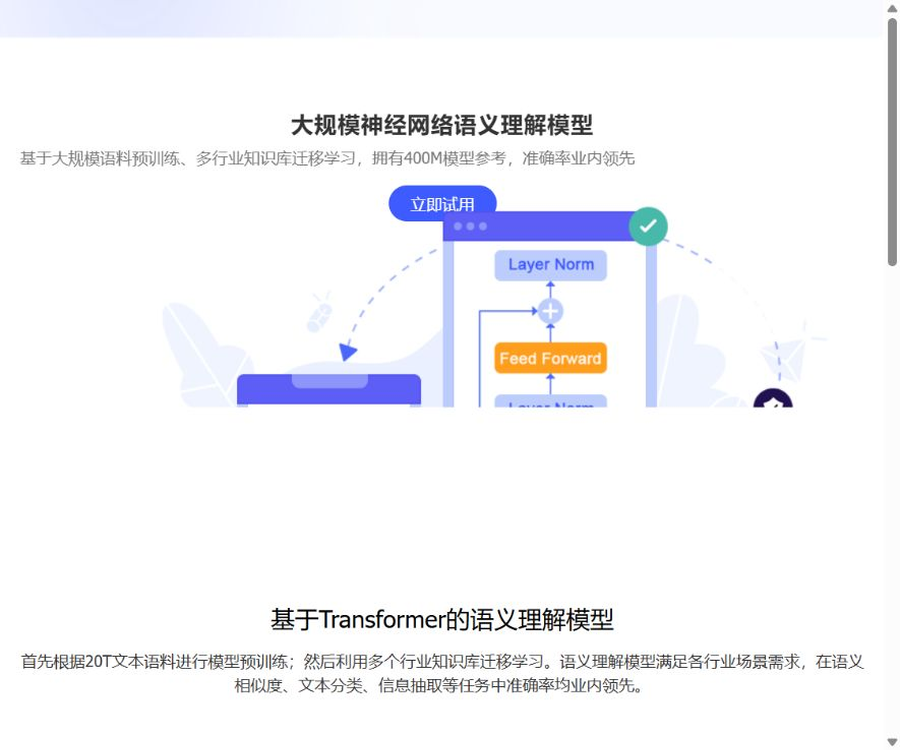
Badao Intelligence’s semantic understanding model is a powerful tool; thanks to large-scale pre-training and industry-specific transfer learning, it is able to deliver highly accurate semantic understanding services.
Tags:AI learning websitesWhat is Badou Intelligence?
Badao Intelligence is an AI robot platform designed for enterprise customer service, employee support, and the automation of business processes.
The product is managed by Shanghai Badou Intelligent Technology Co., Ltd., which offers SaaS cloud platforms as well as on-premises deployment services.
The product positioning of Badou Intelligence
It is not a general-purpose robot for casual conversations between individuals; rather, it serves as an entry point that connects corporate knowledge, processes, tickets, and business systems.
Common projects are implemented in areas such as HR, IT, finance, government affairs, banking, and manufacturing.
The main functions of Badou Intelligence
Enterprise large language model assistant
The platform combines large language models with the enterprise’s local knowledge bases, eliminating the need to train separate models for each knowledge scenario.
Companies can also integrate models from different manufacturers as required by their business needs; the specific list of such models must be determined in the project plan.
Trustworthy knowledge Q&A
When generating answers, robots can provide reference sources to help employees determine the basis for those answers.
Citing sources can only assist in verification; it does not guarantee that the answers are accurate or up to date with the current regulations.
Knowledge management platform
The knowledge base supports question-and-answer, multi-turn conversations, and documents, and covers the processes of knowledge creation, review, and iteration.
Different departments can also collaborate based on their roles and permissions, thereby reducing the risk of all knowledge being accessible to every employee.
Questions and answers about documents and tables
The platform enables semantic search and large-model Q&A based on corporate documents.
The official list currently includes formats such as Word, Excel, PPT, PDF, TXT, and Markdown.
Automatic learning of historical sessions
The system can cluster synonymous questions from chat records and summarize potential knowledge points.
Automatic discovery does not equate to automatic publication; companies still need to establish processes for review, version control, and assignment of responsibilities.
Multiple rounds of dialogue and transaction processing
Robots can collect parameters by asking follow-up questions, thereby facilitating inquiries, requests, appointments, and the processing of tasks.
It can also connect to backend systems, allowing conversations to evolve from answering questions to handling actual processes.
Smart tickets and human customer service
Issues that cannot be resolved automatically can be transferred to human support or submitted as a ticket, so that their progress can be monitored.
Classification, assignment, SLAs, and closed-loop statistics help to unify robotic and human services.
Pre-set knowledge and business templates
The platform offers ready-to-use internal corporate service knowledge, helping teams reduce the time required to get things up and running from scratch.
- The HR knowledge base covers over 300 topics related to hiring and firing, social insurance, housing funds, job transfers, and performance evaluation.
- The financial knowledge base covers over 100 topics, including reimbursement procedures, taxation, and tax identification number inquiries.
- IT operation and maintenance provides knowledge structure templates for various business systems.
- The process templates cover various scenarios such as meeting rooms, schedules, vehicles, and business trips.
- The preset content needs to be reviewed again in accordance with corporate policies, region, and time.
HR Intelligent Assistant
HR assistants can answer common employee questions related to job transfers, social insurance, housing funds, as well as evaluation and performance.
It can also provide different answers by taking into account branches, departments, positions, and tags.
- Questions and answers on employee policies and procedures.
- Guidelines for onboarding, job transfers, and departure processes.
- Advice on benefits, holidays, and social security.
- For complex issues, transfer to a human agent and create a ticket.
- Control the visibility of knowledge and services by identity.
IT Intelligent Services
An IT assistant is suitable for resolving issues related to accounts, software, devices, permissions, and the use of business systems.
Once integrated with ITSM or ticketing platforms, the robot can categorize issues and route them to the appropriate teams.
- Self-diagnosis for common faults.
- Instructions for using the application and accounts.
- Search for operation and maintenance knowledge.
- Ticket creation, classification, and status inquiry.
- Integration of robots with human services.
Financial automation
A financial assistant can handle reimbursement, invoices, tax matters, compliance issues, and the retrieval of financial metrics.
Some solutions also start by identifying information from the original documents, thereby assisting with the review and accounting processes.
- Frequently asked questions about reimbursement policies and procedures.
- Inquiries regarding invoices, tax IDs, and fees.
- Guidance based on compliance rules.
- Query financial data using natural language.
- Document recognition integrated with automated processes.
Which companies are suitable?
- Group companies with a large number of employees and a high volume of repeated inquiries.
- Organizations that need a unified entry point for HR, IT, and financial services.
- A team that possesses a large number of institutional documents, products, and operation and maintenance documentation.
- Companies that require robots to be connected to OA, ITSM, or internal systems.
- Large and medium-sized clients who need SaaS to be deployed quickly.
- Organizations with requirements regarding data boundaries and those that prefer local deployment.
- Industries with complex processes such as finance, energy, government services, and manufacturing.
Badao Smart User Guide
- Statistically analyze existing consultation channels, the number of issues, labor costs, and service objectives.
- Select the first most frequent scenario among HR, IT, Finance, or Customer Service.
- Organize systems, documents, tables, historical Q&A, and ticket data.
- Delete materials that are not authorized for use, have expired, or contain sensitive information.
- Decide between SaaS or on-premises deployment, and conduct a security assessment.
- Establish departmental, position-based, knowledge visibility, and management permissions.
- Import knowledge and set the source, version, validity period, and responsible person.
- Configure multi-round processes, business parameters, and backend system interfaces.
- Set confidence levels, rejection rules, escalation to human agents, and ticketing rules.
- Test the accuracy, citation, and permission isolation using real-world problems.
- First, conduct a trial run in a small department and collect failed samples.
- Continuously review new knowledge, session data, and business performance.
Free trial and pricing
As of August 30, 2026, the official website offers a free trial and scheduled demonstrations, but it does not disclose the price of its standard packages.
SaaS, on-premises deployment, APIs, concurrency, licenses, and custom integrations usually require quotes from enterprises.
- Confirm the trial period, the number of accounts, and the number of robots.
- Verify the knowledge capacity, number of documents, and storage space.
- Verify the message volume, concurrency level, and any excess fees.
- Verify whether the costs associated with model invocation are included in the quote.
- Confirm the costs for implementation, interfaces, migration, and training.
- Confirm the software licenses and annual maintenance fees for local deployment.
- Confirm the after-sales SLA, upgrade, and renewal rules.
There are no multiple standard packages that can be verified, so third-party quotes are not referenced, nor are any fake price comparison tables created.
How to choose between SaaS and on-premises deployment
SaaS cloud platform
- It can go live quickly, with lower initial investment in infrastructure.
- It is suitable for first verifying a single department and a limited scope of knowledge.
- It is necessary to evaluate data upload, model processing, and tenant isolation.
- It is necessary to clarify the methods for exporting and deleting data after exiting the service.
Local deployment
- It is suitable for organizations with high requirements regarding the internal network, data location, and system connections.
- Resources for servers, operation and maintenance, security, and upgrades are required.
- Local deployment does not mean that all models run locally.
- The model, vector database, logs, and external interface boundaries should be verified item by item.
Technical items that need to be confirmed before procurement
- Supported large model vendors and switching methods.
- Mechanisms for knowledge retrieval, rearrangement, citation, and refusal to answer.
- Document parsing format, size, and table capabilities.
- Variables, conditions, and exception handling for multiple rounds of sessions.
- Scope of robot APIs, Webhooks, and system connectors.
- Single sign-on, organizational structure, and permission synchronization.
- Concurrency, response time, throttling, and availability guarantees.
- Logging, monitoring, backup, and disaster recovery.
Data security and privacy
Enterprise projects involve employees, systems, work orders, as well as data from financial and business systems; it is necessary to clarify the boundaries for handling these elements before making any purchases.
The current official website does not contain a fully independent and publicly available privacy policy nor guidelines regarding the processing of corporate data.
- A request is made for a data processing protocol and a security white paper.
- Confirm the data storage location, retention period, and deletion mechanism.
- Verify whether the input and session are used for model training.
- Determine which fields the third-party model can accept.
- Anonymize identity cards, financial data, and employee information.
- Establish minimum permissions, auditing, and alerts for unusual access attempts.
- Revoke account permissions promptly after leaving the job or changing positions.
How to evaluate the performance of robots
- Identify statistical issues and the accuracy of answers.
- Statistics on the automatic resolution rate and the rate of cases transferred to human agents.
- Check whether the reference truly supports the answer.
- Test whether the expiration system can be disabled in a timely manner.
- Verify that employees in different positions cannot obtain knowledge beyond their authorized scope.
- Statistically analyze ticket categorization, assignment, and SLA compliance rate.
- Track changes in employee satisfaction and repeat inquiries.
- Periodic regression tests are conducted using real business samples.
The performance figures shown on the official website are based on specific clients and past projects, and therefore cannot be used as a guarantee for new projects.
API and system integration
The company page on the official website states that the robot API supports a high number of daily calls, which indicates that the platform is suitable for enterprise integration use cases.
However, at present, no public self-service API documentation, key application page, or pricing information for the unified interface can be found.
- Request a list of interfaces and authentication methods at the time of purchase.
- Confirm callback, retry, idempotency, and error codes.
- Verify that the testing environment is isolated from the production environment.
- Confirm the interface changes and version maintenance cycle.
- Sensitive fields should be encrypted and the retention period of logs should be limited.
Product advantages
- Focus on internal corporate services and business processes.
- Covers HR, IT, finance, and customer service.
- Integrate large models with the enterprise’s local knowledge base.
- Supports documents, tables, and knowledge from multiple rounds of dialogue.
- Robots, human customer service agents, and tickets form a closed loop.
- It offers both SaaS and on-premises deployment.
- It has a wealth of case studies on large enterprises.
Usage restrictions and precautions
- The official website does not disclose the prices of the standard packages.
- A free trial does not mean free use on a long-term basis.
- Pre-set knowledge must be updated in accordance with the company’s policies.
- Citing sources cannot completely eliminate model errors.
- Business automation requires system interfaces and process modifications.
- For local deployment, it is still necessary to verify external model calls.
- Some product and case details on the official website may be outdated.
- No official, complete open-source repository was found.
Platform and open-source status
Badao Intelligence delivers its solutions primarily through enterprise SaaS, on-premises deployment, and custom integration.
No official complete source code repository is available at the moment; therefore, the product cannot be labeled as open source or available for free private deployment.
Frequently Asked Questions
What is Badao Intelligence mainly used for?
It is used for corporate knowledge Q&A, intelligent customer service, employee support, ticket collaboration, and business process automation.
Is Badou Smart suitable for individual use?
It is primarily designed for corporate projects and is not a regular messaging tool for individuals; ordinary users generally do not need to purchase it.
Which documents are supported by Badou Intelligence?
The official website lists Word, Excel, PPT, PDF, TXT, and Markdown, and it supports Q&A regarding table content.
How much is Badou Smart?
The official website does not disclose the prices of the standard packages; for SaaS, on-premises deployment, APIs, and custom services, companies need to request a quote.
Can Badou Intelligence be deployed in a private environment?
Yes, the official statement is that both a SaaS-based Q&A robot platform and on-premises deployment services are available.
Does Badou Intelligence provide APIs?
The platform supports enterprise API integration, but no public self-service documentation or unified pricing is available; these details must be requested as part of the project.
Is Badou Intelligence an open-source product?
No, no official complete source code repository has been found at the moment; therefore it cannot be considered open-source or free software for private deployment.
Tools similar to Badou Intelligence

 Guigong Network Security Registration No. 45132202000164