






LAIKA
LAIKA, an intelligent tool focused on AI-generated images
Tags:Common AI image toolsA one-sentence summary
LAIKA was once an AI-based creative writing platform that allowed creators to train personalized writing partners and explore various character and story ideas; it later evolved into Writers Room, a platform based on collaboration among multiple virtual colleagues. The standalone commercial version of this product can no longer be accessed through the original entry point.
Tool Introduction
Write with LAIKA was developed by creators such as Charlene Putney, Martin Pichlmair, and Riddhi Raj; it is designed to assist novelists, game writers, and other teams working on narrative content. It focuses on collaborative creation and the stimulation of inspiration, rather than generating a complete manuscript in one go.
Users could train the writing engine with their own text, or they could choose partners designed based on the styles of writers in the public domain. The system assists authors in moving their stories forward by helping to continue writing, answering questions, facilitating character dialogues, and providing short suggestions.
Current product status
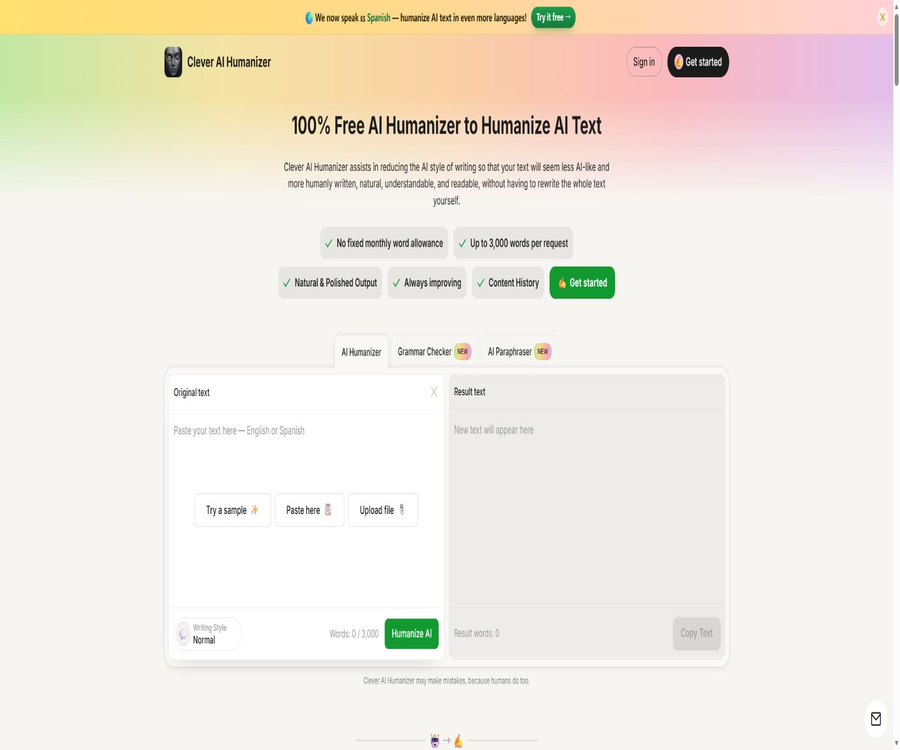
The original domain name of LAIKA now redirects to Clever AI Humanizer, which is operated by another company; its functions, brand, and team are all different from those of the original LAIKA. This redirection cannot be considered as a name change or an upgrade for LAIKA.
| Project | Current status | Correct understanding |
|---|---|---|
| LAIKA Business Writing Platform | The original entrance is no longer available. | It is no longer possible to register and purchase using the old tutorials. |
| Writers Room | It is not possible to confirm the public product entry point. | Historical functions should not be presented as current online services. |
| Original domain name | Jump to other AI rewriting tools | The current page does not feature LAIKA products. |
| Original product price | There is no valid current pricing. | Both the free and paid historical plans are no longer available. |
| Drama Engine | The official GitHub is still publicly available. | It can be studied and developed as an independent narrative agent framework. |
| Official GitHub organization | Keep two public warehouses. | It is not possible to prove that the commercial platform is still in operation. |
Historical product positioning
LAIKA defines AI as a trainable creative partner, rather than an automatic writer. The author provides the text, characters, world setting, and the current paragraph, and AI suggests possible next steps based on these elements; the author then decides whether to accept, modify, or reject them.
- Learn the vocabulary, tone, and narrative preferences in the user’s text.
- Explore different literary styles using the public domain writer Brain.
- Provide suggestions for continuous writing on sentences or short paragraphs.
- Conversations take place around character development and plot issues.
- Simulate discussions among a writing team through multiple virtual characters.
- Allow the author to retain final decision-making power and control over the work.
Personalized writing Brain
In its historical version, LAIKA referred to each writing partner that had been trained on text as a \"Brain.\" Authors could choose to use their own private Brain, or they could employBrains created by members of the community or those in the public domain in order to obtain different perspectives.
| Brain type | Training materials | Historical use | Usage notes |
|---|---|---|---|
| Personal Brain | Personal texts that the author is entitled to use | Maintain the individual vocabulary and tone | You are responsible for verifying the copyright and privacy aspects of the training materials. |
| Project Brain | Novels, worldviews, and character information | Maintain the context of the same work | The old platform is no longer accessible. |
| Public domain writer Brain | Literary texts in the public domain | Explore classic styles and syntax. | New works that cannot pretend to be by the real author |
| Community Brain | Training results made public by other users | Try different creative partners | The scope of authorization and quality need to be verified. |
Writers Room
Later on, LAIKA expanded its single writing partner model to a virtual writing team. Multiple virtual agents could discuss texts and divide tasks within the same environment, with a coordinator deciding who should speak or take action.
Multi-role collaboration
Each partner can have a name, background, description of behavior, basic instructions, emotions, knowledge, and actionable tasks. The characters can communicate with each other, and they can also delegate professional tasks to hidden Deputy agents.
Text context
The system dynamically generates suggestions based on the current text, the last speaker, the room status, and tasks. When the text is too long, it is possible to compress the context by using summaries and range selections.
Explicit action
Summaries, analyses, or specific edits can serve as triggers for defined actions, rather than relying entirely on free-form conversation. These actions are handled by the respective Deputy, who then brings the results back to the conversation.
Historical creation process
- Prepare the novels, characters, or world-building materials that you are authorized to work with.
- Choose Personal Brain, Project Brain, or a suitable creative partner.
- Enter the current paragraph, question, or scenario you wish to explore.
- Ask the partner to continue writing short passages, answer questions related to the characters, or suggest directions.
- Compare multiple suggestions and keep only those that truly fit the story.
- The author rewrote the language, added facts, and unified the characters’ motivations.
- Assign tasks for summaries, analyses, or discussions in the Writers Room.
- Save the key settings to prevent loss of context in subsequent conversations.
- Finally, manual editing and copyright checks are carried out.
Typical use cases
| Scene | Historical functions | Expected product |
|---|---|---|
| Break through the writing block | Short paragraph continuation and multiple suggestions | Plot options that can still be modified |
| Character exploration | Have the character act as a proxy to answer questions or engage in conversations. | Character motivations and linguistic clues |
| Style experimentation | Switch between personal and public Brain spaces | Short samples in different tones |
| Organization of worldviews | Summary, scope extraction, and context assembly | Concentration settings and relationship explanations |
| Screenwriter discussions | Writers Room multi-character agent | Opinions, conflicts, and suggestions for revisions |
| Game narrative | Character allocation, scenario, and actions | NPC dialogue or task approach |
It’s not anything.
- It is not an online writing service that can still be purchased independently at the moment.
- It is not the same product as the existing AI rewriting tools for the original domain name.
- It is not an AI image platform designed for creating images.
- It is not an editor that guarantees the accuracy of facts, characters, and timelines.
- It is not a service that automatically grants commercial copyright to the training text or output.
- It is not a tool that generates a complete, publishable novel simply by entering a title.
Pricing status
The price information was verified on August 23, 2026; the actual amounts, taxes, exchange rates, and discounts may vary, and the final figures will be those displayed on the settlement page.
LAIKA’s commercial products used to offer free and paid tiers, but the original platform no longer has a valid purchase page; therefore, any previous monthly or annual fees, quotas, or trial benefits can no longer be applied as part of the current pricing.
| Package or version | Current price | Billing cycle | Core rights or status | Suitable for users |
|---|---|---|---|---|
| LAIKA free tier | Expired | Not applicable | Historical experience benefits are not available at the moment. | Only knowing the product’s history |
| LAIKA Premium Tier | Expired | Not applicable | Historical expansion feature; there is currently no basis for renewal. | Historical users of the original platform |
| Writers Room | Current price not available. | Not applicable | It is not possible to determine the status of the public online service. | It is not recommended to make purchases using the old page. |
| Drama Engine | The code can be used for free. | Not applicable | An open-source framework under the MIT license; models and a development environment must be provided by the user. | Developers and researchers |
| Model inference cost | Decided by the selected service provider. | By call or package | You are responsible for any issues that arise when running the Drama Engine. | In-house application team |
What is Drama Engine?
Drama Engine is a narrative agent framework developed by the Write with LAIKA team for Writers Room; it is written in TypeScript and can run in browsers. It organizes characters, context, delegation, and dynamic cues into an expandable multi-agent interaction system.
- It supports the orchestration of multiple role agents and hosts.
- Execute specialized task chains through Deputy agents.
- Dynamically assemble hints based on the text, characters, and world state.
- It allows for the definition of contexts, emotions, knowledge, and unlocking conditions.
- It supports specifying actions and custom reply functions.
- It provides an in-memory database and allows the replacement of the persistence interface.
- Model interfaces compatible with common OpenAI formats.
- It can be extended to writing, character interactions, and agent workflows.
Drama Engine integration process
- Prepare projects that support TypeScript and controlled runtime environments.
- Install the Drama Engine package or obtain the open-source code.
- Copy the environment configuration template and select the model service.
- Set compatible completion or chat endpoints.
- Define partners, facilitators, scenarios, cues, and actionable actions.
- First, use a short text without sensitive information to test the dialogue switching.
- Configure summary and context range policies for long texts.
- Implement the required interfaces when connecting to a persistent database.
- Set stop conditions for model errors, timeouts, and iterative conversations.
- Protect the keys before going live, and test cost and content security.
Model and technology compatibility
| Project | Drama Engine capabilities | Precautions |
|---|---|---|
| Runtime language | TypeScript | It is necessary to build the frontend or application interface by oneself. |
| Operation location | It can be executed in a browser. | The service key cannot be exposed on the browser side. |
| Model interface | Completion and chat endpoints compatible with the OpenAI format | Different service providers still have differences in fields and cross-domain aspects. |
| Prompt format | Supports formats such as ChatML and Mistral. | It is necessary to conduct tests based on the model’s capabilities. |
| Database | Memory implementation and replaceable interface | The production environment must ensure persistence and proper permissions on its own. |
| Network request | Use a configurable network request client. | It is necessary to handle cross-domain issues, retries, and timeouts. |
GitHub and the open-source status
The commercial products of LAIKA are not made available with their complete source code, but Drama Engine is released as a standalone framework under the MIT license. The official organization also maintains a repository of starter templates.
| Project | Public status | License | Correct understanding |
|---|---|---|---|
| LAIKA’s commercial website | Not open-source and no longer available | Not disclosed | The original product cannot be deployed in a private manner. |
| Full Writers Room application | No complete open-source version has been verified. | Not disclosed | The framework does not include all product interfaces and services. |
| Drama Engine | Public code | MIT | The narrative agent framework can be studied, modified, and integrated. |
| Drama Engine template | Public code | The warehouse does not indicate a separate license. | When using it, it is necessary to verify the licensing relationship with the main framework. |
| Third-party models | Provided by various service providers | respective rules | Not included in the MIT license |
APIs and SDKs
The original LAIKA commercial platform did not have any verifiable public APIs available. Drama Engine can be installed as a TypeScript library, and requests can be sent via compatible model endpoints; however, it is an open-source development framework, not the LAIKA cloud API that was previously in use.
Data and Privacy
The existing privacy policy for the original commercial service can no longer be determined; therefore, do not upload manuscripts, unrevealed characters, customer scripts, or personal information through the old entry point. The current domain name is used for another product, and its terms do not apply to the way data was handled in the original LAIKA service.
When a custom Drama Engine is created, data flows according to the model services, databases, and hosting environments chosen by the developer. The framework itself does not take over from the application team in handling user authorization, retention periods, deletion requests, and cross-border data transfers.
- Only training texts that the author owns or has permission to use are processed.
- Do not write private model keys into browser code.
- It is preferred to save and use keys through a server-side proxy.
- Record which texts will be sent to external models.
- Set expiration dates for chat records and world status.
- Separate the data of different users and different writing projects.
- Define clear permissions for community Brain and shared content.
- Users are allowed to export and delete their own creative content.
Copyright and Creative Considerations
| Problem | Risk | Suggestions |
|---|---|---|
| Training text | It may not be permissible for use in model processing. | Use only original material or material that has been explicitly authorized. |
| Writer’s style | It may lead to misidentification or disputes regarding personal rights. | Do not pretend to be a living author or fabricate authorization. |
| AI continuation writing | It may be similar to existing works. | Manually search for and rewrite key paragraphs. |
| Character setup | Unreleased projects may be leaked. | Use controlled models and minimal context. |
| Community sharing | Others may copy or reuse it. | Read the license before publishing and keep a version. |
| Publishing and games | The platform’s output does not automatically handle the rights chain. | Formal review is carried out by the author and the publisher. |
Which users are it suitable for
- Researchers who work on early tools for personalized creative writing.
- Developers who wish to understand multi-character narrative agents.
- There are experimental projects that require the creation of a prototype for a virtual writing team.
- Designers who study characters, world states, and dynamic cues.
- TypeScript teams that are willing to deploy models and interfaces on their own.
- Educational or research users who wish to reuse the MIT Narrative Agent framework.
Product advantages
- Position AI as a creative partner rather than a tool for writing entire texts.
- The individual Brain reflects a personalized approach to style and project context.
- Writers Room uses multi-character discussions for narrative creation.
- Drama Engine exposes the role orchestration and delegation mechanisms.
- The framework is decoupled from the model service providers.
- Dynamic hints, contexts, and world states are suitable for interactive narratives.
- The MIT license facilitates research and secondary integration by developers.
Main limitations
- The LAIKA commercial products can no longer be accessed through the original entry point.
- The original domain name redirects to unrelated products, posing a clear risk of confusion.
- The historical prices, account information, Brain data, and status of the works are unclear.
- No publicly available version of the full Writers Room application has been identified.
- The open-source Drama Engine requires development skills and custom models.
- Configuring keys directly in the browser can lead to serious data leaks.
- Multi-agent dialogue can become cyclic, deviate from the topic, or rapidly increase reasoning costs.
- AI may generate factual errors, distorted representations of people, and copyright issues.
- The framework does not provide content moderation or production-grade data governance automatically.
- The database originally classified it as an image tool, which does not reflect its actual product nature.
Pre-use checklist
- To confirm the requirement is to understand the historical LAIKA or to develop a Drama Engine.
- Do not look for old LAIKA accounts on the current domain’s redirect page.
- Back up the old project texts and training materials that are still available.
- Read the Drama Engine code, license, and technical documentation.
- Select the model provider that is authorized to process the target text.
- Place the model key in a secure server environment.
- Use short texts to verify role, delegation, and shutdown logic.
- Set limits for multiple agent rounds, timeouts, and costs.
- Establish processes for data deletion, user authorization, and copyright verification.
- Do not mistake the successful operation of the framework for a restoration of the old LAIKA products.
Frequently Asked Questions
Can LAIKA still be used?
The original LAIKA commercial service cannot be accessed using the original domain name; the current domain redirects to another AI rewriting product. There is no evidence indicating that LAIKA is still accepting new users or payments.
Is LAIKA an AI image tool?
No, it is primarily aimed at creative writing, novels, game narratives, and collaborative multi-character writing. The original classification of the database images was an error resulting from historical considerations.
Has LAIKA been renamed Clever AI Humanizer?
There is no verifiable information to support this relationship. The operators, purposes, and functions of the two are different; a domain name change does not equate to brand inheritance.
How did LAIKA work in the past?
The author can train Brain using their own texts, or choose other writing partners to obtain creative suggestions through continuation writing, Q&A, character interactions, and discussions in the Writers Room.
Is there a free version of LAIKA as well?
There are no current pages for free or paid products. Past options can no longer serve as a basis for registration, quotas, or pricing.
What is the Drama Engine?
It is a TypeScript narrative agent framework developed by the LAIKA team for Writers Room, offering support for character management, task assignment, dynamic prompts, and replaceable model backends.
Is the Drama Engine open source?
Yes, the main framework is licensed under the MIT license. It is merely a underlying proxy framework; it does not include all of the interfaces, accounts, cloud services, and training data that were part of the original LAIKA commercial product.
Can I use my own model?
The Drama Engine supports completion and chat interfaces in the common OpenAI formats, which allows it to integrate with compatible services. Users are responsible for handling matters related to cross-domain issues, authentication, keys, costs, and privacy.
Summary
LAIKA was an important early product in the field of personalized creative writing and virtual Writers Rooms; however, its standalone commercial services are no longer available, and the original domain name is now used for a completely different tool. The catalog entry should be marked as discontinued or a legacy product, rather than continuing to direct people to sign up for it.
For developers, the officially released Drama Engine remains valuable: it shows how to create narrative agents using characters, hosts, Deputies, context, and dynamic prompts. When using this framework, one still has to handle tasks such as designing the interface, integrating models, ensuring security, managing data, and controlling copyrights.
Tools similar to LAIKA


 Guigong Network Security Registration No. 45132202000164