






AI Product Shot
AI Product Shot – a smart tool dedicated to AI-generated images
Tags:Common AI image toolsWhat is an AI Product Shot?
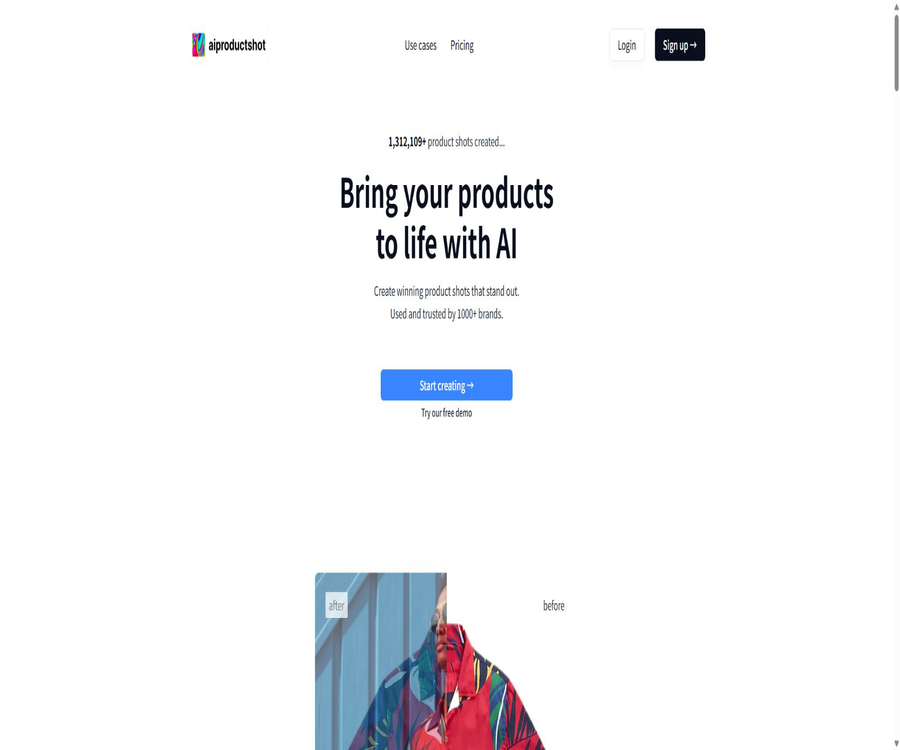
AI Product Shot is a web-based AI product photography platform designed for brands and creative teams that need to produce e-commerce images, advertising materials, and visual content for social media on a regular basis. Users first train a custom AI model using product photos, after which 4K product images with various scenarios, lighting conditions, and compositions can be generated.
It is not a simple background replacement tool; rather, it places the product in a photographic scene created by AI. The platform facilitates rapid experimentation with creative ideas, making it suitable for testing visual concepts before actual shooting, and it also allows for the creation of marketing materials that have been reviewed by humans.
A one-sentence summary
AI Product Shot transforms ordinary product photos into professional-grade visual representations of products, by using product models, textual descriptions, and reference images to add elements such as lighting, setting, and composition.
Core functions
- AI product model: A dedicated model is trained using input photos for each individual product.
- Scene generation: Describe in words the environment in which the product is located, as well as the props and the atmosphere of the space.
- Light control: Set to soft light, side light, back light, natural light, or studio lighting effect.
- Composition control: Planning for close-ups, top-down views, centering, negative space, and ad layout.
- Product focus: In generation scenarios, ensure that the product remains the visual focus.
- Inspire Engine: Refer to the lighting, composition, and artistic style of other works.
- Creative variations: Quickly generating different marketing concepts for the same product.
- 4K output: The paid plans offer a varying number of 4K shots on a monthly basis.
- Commercial use: All current subscription plans specify the rights for commercial use.
- Free tools: Independent tools that do not require logging in, such as those for processing images on a white background.
How do AI product models work?
An AI product model corresponds to a product for which it is necessary to maintain accurate recognition of its appearance, and it is trained using the photos uploaded by the user. Once training is complete, the user can generate product images repeatedly using that model, without having to describe the product’s appearance from scratch each time.
The effectiveness of the model depends on whether the training photos clearly show the packaging, proportions, labels, and other key details. Reflective materials, transparent containers, small text, and products with complex structures still require closer inspection.
What is the use of Inspire Engine?
Inspire Engine allows users to convey ideas related to lighting, composition, and artistic style through reference photos, which helps to reduce the time needed for trial and error when using only textual instructions. Reference images can be used to create a certain atmosphere, but it is not allowed to copy protected trademarks, packaging, or original artwork belonging to others.
Tutorial on generating product images
- Register an account and select a package that matches the number of products and the monthly production volume, or opt for a 7-day trial.
- Prepare several clear photos of a product, showing its front, side, back, as well as any key details.
- Create an AI product model, upload the necessary materials, and wait for the training to be completed.
- Describe the scene, lighting, camera angle, composition, props, background color, and target channel.
- Generate multiple sets of variants, first compare product consistency, and then select those with the best visual appearance.
- Zoom in to examine label text, edges, reflections, shadows, proportions, and background objects.
- Download the appropriate images, and then crop and layout them according to the requirements of the e-commerce platform or the advertising space.
Refer to the tutorial for creating illustrations.
- Select reference images that are intended solely for expressing style, and make sure you have the permission to upload and use them.
- Submit the reference image to the Inspire Engine to analyze the lighting, composition, and artistic direction.
- Maintain the target style while redescribing the brand colors, product highlights, and usage scenarios.
- Multiple versions are created to prevent the final output from being too similar to the reference works in terms of element arrangement.
- It should be used only after designers have checked for originality, brand guidelines, and requirements regarding the channels of publication.
Tutorial on tools for white backgrounds
- Open the tool with a white background and upload the product images in JPEG, PNG, or WEBP format.
- Wait for the system to identify the subject, remove the original background, and replace it with a pure white background.
- Check whether the fine hairs, transparent edges, holes, and product shadows are intact.
- Preview and download the image, then adjust it according to the size specifications of the target platform.
How to write prompts
Effective prompts should translate sales objectives into specific visual requirements, focusing on details such as the scene, lighting, camera angle, colors, materials, and areas of negative space. Avoid using terms like “high-end” or “attractive”, as they provide no concrete information about the appearance of the image.
- Scenarios: bathroom counters, kitchens, outdoor camping, minimalist studios, or holiday gift boxes.
- Lighting: natural light in the early morning, soft overhead lighting, edge lighting, or high-contrast advertising lights.
- Composition: centered in the foreground at a 45-degree angle, top-down view with a flat layout, or with a text area on the right side.
- Materials: stone, wood grain, acrylic, water surface, fabric, or matte metal.
- Lenses: macro details, standard product lenses, or images of lifestyle scenes in their surrounding environment.
- Restrictions: No additional products may be added, the packaging color cannot be changed, and the brand logo must remain visible.
Which users are it suitable for
- Independent website owners and e-commerce sellers: Create scenario images for new products, product detail pages, and promotional pages.
- Consumer brands: Quickly test advertising concepts and visual approaches.
- Social media team: Creates a series of content posts related to the same product.
- Marketing agencies: Explore concepts for multiple clients and deliver images in bulk.
- Photography and design team: Used for initial proposals, storyboarding, and low-cost creative testing.
- Entrepreneur: Obtain available product visuals first when the budget is limited.
Typical use cases
- Lifestyle scenarios in the e-commerce main image and product detail pages.
- Visuals for new product launches, holiday promotions, and time-limited offers.
- Information flow ads, landing pages, and images for email marketing.
- Short video covers, social media posts, and a brand content calendar.
- A preview of the scene, lighting, and composition before actual photography.
- Visual localization of the same product for different countries or target audiences.
Not suitable for completely replacing actual photography.
- Photos required to prove the actual size, color, or regulatory information of the product.
- High-precision materials such as jewelry cut surfaces, transparent liquids, and highly reflective metals.
- The packaging contains a large amount of fine print that must be reproduced exactly word for word.
- Scenarios that require a real person as endorser, actual usage results, or legal evidence.
- The customer contract explicitly specifies the original photographic files and the details of the shooting process.
Price pattern
AI Product Shot is available on a monthly subscription basis. The official website offers four tiers: Lite, Pro, Scale, and Agency, along with a 7-day risk-free trial period. Prices and quotas may change, so it is advisable to check the pricing page again before making a purchase.
| Package | Monthly fee | AI product models/month | 4K images/month | Commercial use | Treat with priority |
|---|---|---|---|---|---|
| Lite | 19 dollars | 2 | 200 pieces | Support | Not included |
| Pro | 39 dollars | 5 | 1000 pieces | Support | Support |
| Scale | 99 dollars | 25 | 5000 pieces | Support | Support |
| Agency | $ | 100 pieces | 20,000 pieces | Support | Support |
How to choose a package
- Lite: Suitable for individuals or small shops that have only a limited number of core products and low monthly needs for image generation.
- Pros: Suitable for small brands that operate multiple products simultaneously and need faster processing.
- Scale: Suitable for growing e-commerce teams with a large number of SKUs and marketing campaigns.
- Agency: Suitable for organizations that need to manage multiple clients, various product models, and handle large-scale deliveries.
7-day trial and cancellation
The official website currently offers a 7-day trial period and allows users to cancel their subscription at any time. After cancellation, access usually remains available until the end of the current payment cycle, after which no further charges are applied.
As for whether a payment is required during the trial period, when it becomes necessary to pay, and the exact time of deduction, the real-time instructions displayed on the registration and settlement interfaces shall prevail.
Conditions for refund
The terms state that a full refund can be requested within 14 days of purchase, as long as the product has not been used and the AI model has not been trained. If the service has already been used, or if more than two downloads are made, then the conditions for a refund may not be met.
Commercial licensing and rights to the generated works
The pricing page states that users can use the product photos anywhere and that a full commercial license is provided. The legal terms are more detailed: users retain ownership of the content they upload, while the platform claims ownership of the resulting works; however, it grants compliant users the exclusive right to reproduce and display those specific works.
Similar or nearly identical images may still be created by other users; before releasing them commercially, it is necessary to check for any issues related to trademarks, characters, packaging, and third-party intellectual property rights. The indication “suitable for commercial use” in the catalog does not mean that the platform guarantees that the works are free from any infringement issues.
Upload content and data deletion
The terms state that users retain ownership of the photos and data they upload, and the platform will not sell or use this information without explicit consent. The data is used to provide services such as storage, processing, backup, and analysis.
The terms specify that the data will be automatically deleted 30 days after it is used, and it will also be removed from the active database when the account is terminated or at the user’s request; however, residual copies may remain in the backups for a limited period of time.
Privacy and account requirements
- The platform handles names, email addresses, payment information, prompts, input photos, and output images.
- Unnecessary marketing cookies can be declined, but essential account and payment information is required for the service.
- One registered account can be used by only one user, and each user is allowed to have only one account.
- Users are not allowed to use automated tools to access, interact with, or generate assets in bulk.
- The minimum age for using this service is 13; if a person has not reached the local age of legal consent, the consent of a guardian is required.
Content guidelines
- It is not allowed to generate content that is insulting, offensive, harassing, violent, adult-oriented, or bloody.
- It is not allowed to reproduce the works of other users publicly without permission.
- Reverse engineering of the services or the creation of assets is not permitted.
- The platform must not be used for competitive research.
- Illegal or abusive behavior may result in the account being suspended or banned.
Product advantages
- Training models around specific products focuses more on product consistency than general text-to-image generation.
- It allows for quick testing of set design, lighting, composition, and artistic direction.
- Inspire Engine reduces the difficulty of using purely textual descriptions.
- The four-tier package covers production levels for small shops, brands, and organizations.
- The current package includes 4K images as well as the right to use them for commercial purposes.
- It is possible to explore concepts without the need to organize a venue, set designs, or a physical photography team.
Usage restrictions
- Generative images may change the text, proportions, colors, and details of packaging.
- Transparency, reflectivity, complex edges, and dense text still tend to have defects.
- The product model must be trained first; adding new SKUs will consume the monthly model quota.
- There are no permanent guarantees regarding service quality, algorithms, style, functions, and stability.
- The account cannot be shared among multiple people, nor is automated access or scraping allowed.
- Similar generated results may appear; exclusive rights apply only to the specific creations of each user.
- Currently, there are no public APIs available, which makes it difficult to integrate directly with automated product workflows.
How to improve the quality of output images
- Upload photos with even lighting, a clean background, clear image quality, and no trimmed edges.
- Ensure that the training materials cover various aspects and key structures of the product.
- Describe the scene, lighting, camera angle, and composition separately.
- Only one or two variables are changed at a time, which makes it easier to determine which setting is effective.
- Create fixed prompt templates for brand colors, materials, shadows, and negative space.
- Before release, verify each item of the packaging and product features against the original photos.
Whether API is provided
As of this verification, the official website offers only a web-based workflow; it does not provide any API documentation for developers, nor a key management console or information regarding call costs. Companies that need to integrate the system on a large scale should contact the platform directly, as they should not consider the web-based automation as an official API.
GitHub and the open-source status
No official GitHub repository that can be verified in conjunction with the official website was found. The product photography projects with the same name or similar names that were discovered belong to third parties, and therefore cannot serve as the source code for AI Product Shot.
Therefore, this tool should be classified as a closed-source commercial SaaS product; the official website does not disclose the model weights, training code, datasets, or open-source license.
Basic information
| Project | Content |
|---|---|
| Tool name | AI Product Shot |
| Tool type | AI product photography and image generator |
| Usage method | Web version |
| Price pattern | 7-day trial plus monthly subscription |
| Minimum monthly public fee | 19 dollars |
| Highest public monthly fee | $ |
| Output specifications | The package includes 4K shots. |
| Commercial use | Paid plans are available, but the terms must be followed. |
| API | Not disclosed |
| Open-source status | Not open source |
Recommendation score
Recommendation score: 4.2 / 5. It is suitable for e-commerce brands that wish to reduce the initial costs associated with traditional photography and to quickly test various product concepts; however, high-precision packaging, authentic materials, and compliant visuals still require actual photography or professional post-processing.
Frequently Asked Questions
Is AI Product Shot free?
It is not a product that is free on a long-term basis; the official website offers a 7-day trial period, and the regular subscription starts at $19 per month.
Does it just change the background?
No, it generates scenes around the product model and allows for control over the setting, lighting, composition, and artistic style.
What is an AI product model?
It is a dedicated model trained using input photos of individual products, and once trained it can be used to generate various product images.
Can images from other brands be used as a reference?
Inspire Engine supports reference images, but users must have the permission to upload them, and they should avoid copying protected creative and brand elements.
Can the generated images be used for commercial purposes?
The current paid plan is designated for commercial use; users must still comply with the terms and conduct their own checks regarding third-party intellectual property rights.
Can it be canceled at any time?
Yes, the official website states that subscriptions can be canceled at any time; once canceled, renewal will generally stop at the end of the current billing cycle.
Is refund support available?
The terms provide a 14-day refund period, provided that the services and training models have not been used; the actual eligibility must be confirmed by the platform.
Will the uploaded images be deleted?
The terms state that the data is automatically deleted 30 days after it has been used; therefore, do not rely on this platform as the only source for long-term data backup.
Is there an official API?
The official website does not currently provide API documentation or pricing information for calls.
Is AI Product Shot open source?
It is not open source; currently, there are no verifiable official codes, model weights, or open-source licenses available.
Tools similar to AI Product Shot




 Guigong Network Security Registration No. 45132202000164