






AI/R
AI/R, an intelligent tool focused on AI-driven writing.
Tags:AI writing toolsWhat is AI/R GEO?
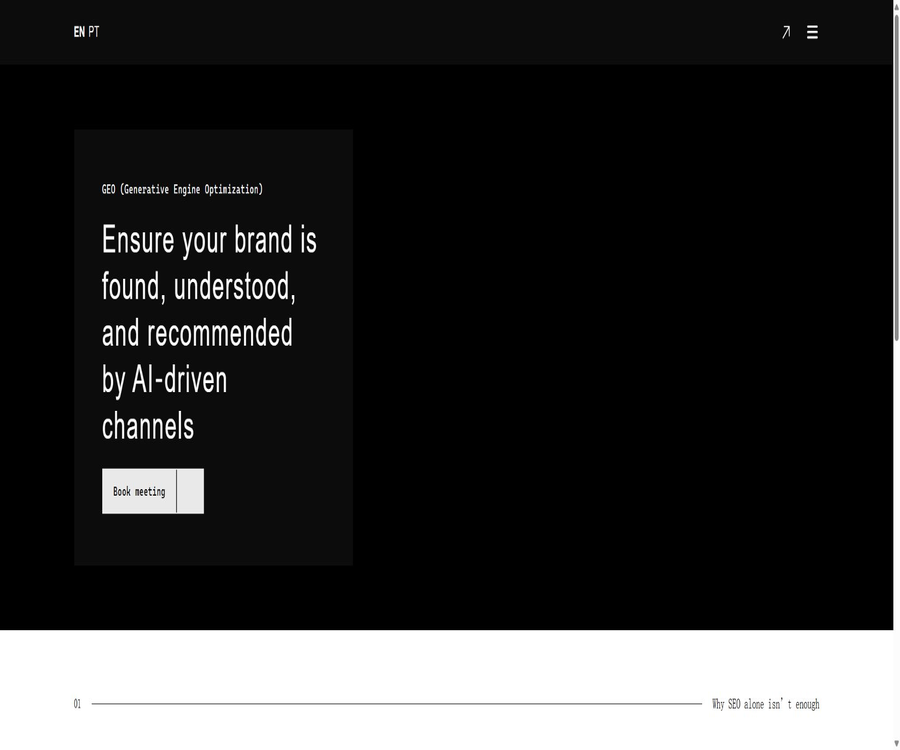
AI/R GEO is an enterprise-grade generative engine optimization solution offered by AI/R Company; its goal is to enable brands, products, and services to be discovered, understood, and recommended through generative search, conversational AI, and agents. It leans more towards data, content, and semantic engineering services rather than being a writing tool that generates articles with just one click.
A one-sentence summary
AI/R GEO transforms fragmented corporate information into knowledge that is machine-readable, verifiable, and reusable, through unified semantics, structured data, knowledge graphs, APIs, and ongoing governance.
What is GEO?
GEO is the abbreviation for Generative Engine Optimization; in Chinese it is often translated as Generative Engine Optimization. It focuses on whether brand information can be properly retrieved, understood, and utilized in AI-generated responses, intelligent recommendations, and Agent decisions.
- Designed for generative search and conversational Q&A.
- Emphasize complete, clear, and consistent facts.
- Use machine-readable data structures.
- Reduce content conflicts between different pages and systems.
- It supports AI Agents in consuming data on goods and services.
- Continuous monitoring is required, rather than making changes to the text just once.
Why traditional SEO is not sufficient
- Users are shifting from keyword lists to natural language conversations.
- AI may provide an answer directly, without showing a traditional results page.
- The purchase decision may be assisted or carried out on behalf of the agent.
- Unstructured content is difficult for machines to combine accurately.
- The absence of certain attributes will prevent the product from being included in the recommendations.
- Conflicting information from multiple systems reduces credibility.
- Traditional organic traffic may be diverted by zero-click answers.
Core functions
- Assess the current GEO maturity of the enterprise.
- Inventory the information in websites, catalogs, and internal systems.
- Establish a unified semantic structure and entity relationships.
- Use standards such as Schema.org to describe data.
- Connect knowledge graphs to content and product catalogs.
- Provide consistent data to various channels through APIs.
- Continuously monitor data quality, integrity, and consistency.
- Analyze the visibility of the brand in AI responses.
GEO Maturity Assessment
- Identify content that is accessible via AI search and agents.
- Check whether the key entities and attributes are complete.
- Look for duplicate, conflicting, and expired information.
- Assess the degree of structuring of the pages and data sources.
- Clarify the data responsibility holders and the update process.
- Establish priorities for industry and business use cases.
- A phased implementation roadmap is developed.
Unified semantic structure
A unified semantic structure is used to clarify concepts such as brands, products, services, locations, prices, qualifications, and processes within a company. The same fields must have consistent meanings across different departments and systems in order to avoid errors caused by AI in combining information.
- Define core entities and unique identifiers.
- Standardize attribute names, formats, and value ranges.
- Establish business relationships between entities.
- Record synonyms, aliases, and multilingual names.
- Distinguish between facts, rules, and marketing descriptions.
- Retain the source, update time, and responsible person.
Structured data and Schema.org
- Add machine-readable tags to products, services, organizations, and locations.
- Describe the price, inventory, reviews, and availability.
- Keep the page content in line with the markup data.
- Select the appropriate type and attributes based on the standards.
- Use validation tools to check for syntax and missing fields.
- Avoid hiding false content in structured data.
- Update the tags continuously as the business evolves.
Knowledge graph integration
Knowledge graphs organize dispersed information into entities, attributes, and relationships, enabling AI to understand which brand a product belongs to, under what conditions a service is applicable, and how various concepts are connected. Their quality depends on the data sources and the governance rules in place.
- Connects brands, products, categories, and channels.
- Describe the service conditions, regions, and target audience.
- Unify the entity identities across multiple systems.
- Save the sources of facts and the history of changes.
- Supports querying, recommendations, and Agent reasoning.
- Set access controls for sensitive and restricted relationships.
API-first architecture
- Data is provided to websites, applications, and channels through interfaces.
- Reduce version differences caused by copying and pasting.
- Allow the AI Agent to access real-time information on products and services.
- Different permissions are used for writing and querying.
- Reduce the risk of interface changes through version control.
- Prepare fallback solutions for caching, rate limiting, and failures.
- Log the source of the call and the usage of data.
Data quality governance
- Check whether all required attributes are present.
- Price, specification, and policy conflicts were found.
- Identify broken pages and expired content.
- Standardize units, dates, currencies, and categories.
- Assign a responsible team for each data domain.
- Set up review, publication, and rollback processes.
- Establish ongoing quality monitoring indicators.
Content and data operations
AI/R GEO focuses on reducing manual tasks in content and data management. Automation can be used to create structures, synchronize fields, and identify issues, but experts are still needed to review facts, ensure compliance, and maintain the brand’s image.
- Extract entities and attributes from the raw data.
- Standardize product and service descriptions in bulk.
- Sync the updates to multiple channels.
- Automatically mark missing and abnormal fields.
- Generate a repair queue for manual processing.
- Retain records of manual approvals and changes.
AI visibility monitoring
- Test whether the brand appears in key user queries.
- Check the factual accuracy of the AI’s answers.
- Record the differences in results between different engines and prompts.
- Observe the frequency of appearance of brands, products, and competitors.
- Identify issues with weak sources or incorrect understanding.
- Convert findings into data and perform content repairs.
- A single response cannot be considered as an indication of a stable ranking.
Relationship with SEO
| Dimension | Traditional SEO | GEO | Common foundation |
|---|---|---|---|
| Main entrance | Search results page | AI answers and agents | Publicly accessible content |
| Optimization target | Pages, keywords, and links | Entities, facts, relationships, and sources | Content quality |
| Technical methods | Crawling, indexing, and page experience | Structured data, graphs, and APIs | Technical health of the website |
| Result format | Click and rank | Answers, citations, and recommendations | User conversion |
| Key governance aspects | Page update | Cross-system consistency | Authenticity and timeliness |
Retail and consumer goods scenarios
- Standardize product names, attributes, and variants.
- Complete the details regarding size, material, applicable conditions, and inventory.
- Connects brands, products, categories, and stores.
- Supports filtering and comparison with an AI shopping assistant.
- Reduce purchases being abandoned due to missing information.
- Reduce the risk of returns due to unclear descriptions.
- Improve the efficiency of directory expansion and multi-channel synchronization.
Financial services scenarios
- Structured accounts, cards, loans, and insurance products.
- Clarify qualifications, fees, risks, and regional restrictions.
- Distinguish between marketing information and binding terms.
- It is recommended to use the latest policies and product information.
- Configure access and approval for restricted content.
- Retain evidence of the source, version, and compliance.
- Important recommendations still need to comply with local regulations.
Manufacturing scenarios
- Convert complex technical parameters into a clear structure.
- Connect products, parts, compatibility, and documentation.
- Standardize engineering, sales, and after-sales terminology.
- Supports AI-assisted product selection and technical Q&A.
- Mark authentication, regional, and security requirements.
- Reduce the entry of products with incorrect specifications into downstream channels.
- Maintain the product life cycle and substitution relationships.
Medical and health scenarios
- Clearly describe the services, location, and procedure for seeking treatment.
- Distinguish the applicable population, restrictions, and preparation requirements.
- Connects departments, doctors, projects, and booking channels.
- Ensure that the content includes a source, as well as dates of review and update.
- Strengthen governance over professional conclusions and sensitive data.
- AI demonstrations cannot replace medical diagnosis.
- Comply with privacy, advertising, and industry regulations.
Which companies are suitable?
- Organizations that have a large catalog of goods or services.
- Companies whose information is spread across multiple systems and departments.
- Brands that are highly dependent on search discovery and digital conversion.
- Teams that plan to have AI Agents consume business data.
- Companies that need unified information in multiple languages for various markets.
- Industries that are regulated and place a strong emphasis on traceability.
- Companies that already have a foundation in SEO and wish to expand into the AI area.
Typical use cases
- Restructure the data model of the e-commerce product catalog.
- Create a knowledge graph for brands and products.
- Deploy consistent structured data for the website.
- Provide real-time product interfaces to the AI shopping assistant.
- Monitor whether the brand appears in AI recommendations.
- Manage conflicting information across multiple regional websites.
- Convert technical documents into queryable knowledge via agents.
- Establish a continuous GEO quality operation center.
It’s not very suitable for which situations
- Website owners who only want to create a few SEO articles.
- Small websites that do not have consistent data on their products or services.
- Users who wish to purchase a SaaS account at a fixed low price.
- Organizations that lack a person in charge of data and lack cross-departmental collaboration.
- Require assurance for a certain AI response or ranking.
- Preparing to use fake structured data to manipulate recommendation systems.
- Teams that need the full open-source GEO software in order to deploy it on their own.
Prices and cooperation methods
As of August 2026, the AI/R GEO official website does not disclose any packages, available seats, monthly fees, or free trials; sales are carried out mainly through scheduled meetings and business consultations. The price type should be marked as a customized quote.
| Cost range | Public price | Key points for requesting quotes |
|---|---|---|
| Maturity assessment | Not disclosed | Data sources, markets, brands, and depth of evaluation |
| Semantics and graph design | Not disclosed | Number of entities, industry models, and scope of governance |
| Implementation of structured data | Not disclosed | Number of pages, sites, languages, and templates |
| API and system integration | Not disclosed | Number of systems, real-time requirements, and security needs |
| Modification of content and outline | Not disclosed | Scale of SKUs, services, and documentation |
| Ongoing monitoring and governance | Not disclosed | Metrics, frequency, reporting, and support levels |
How to evaluate quotes
- Count websites, directories, languages, and markets.
- List PIM, CMS, CRM, and data platforms.
- Identify the entities that require governance and the scale of their attributes.
- Distinguish between one-time implementation costs and ongoing operating costs.
- Clarify the boundaries between software, consulting, and human services.
- Confirm the deliverables, data ownership, and maintenance responsibilities.
- Expand after verifying the value through pilot business areas.
GEO Maturity Assessment Tutorial
- Select a high-value brand or business area.
- Collect websites, directories, documents, and internal data sources.
- List the key issues users have with AI channels.
- Check entities, attributes, sources, and structured tags.
- Test the understanding and responses of multiple generative engines.
- Log missing, conflicting, erroneous, and inaccessible content.
- Develop a remediation roadmap based on the impact on business operations.
Structured Data Implementation Tutorial
- Define the actual business entity corresponding to the page.
- Select the appropriate Schema.org type.
- Map necessary attributes from trusted systems.
- Generate tags that correspond to the visible content on the page.
- Use a validation tool to check for syntax and warnings.
- Sample-check prices, inventory, and policies.
- Monitor for errors after going live and update as data changes.
Tutorial on Building Knowledge Graphs
- Identify the core entities such as brands, products, services, and locations.
- Create a stable and unique identifier for the entity.
- Define attributes, relationships, and allowed values.
- Connect to authoritative sources and cite them.
- Handle aliases, duplicates, and conflicting records.
- Query through the business problem test map.
- Establish systems for publication, review, and ongoing maintenance.
AI Visibility Testing Tutorial
- Develop a set of questions covering the cognitive, comparison, and purchase stages.
- Tests are conducted in fixed locations, languages, and times.
- Document brand appearances, recommendations, citations, and factual errors.
- Compare with competing brands and authoritative sources.
- Map the issue to specific data or content gaps.
- After the repair, retest using the same method.
- Judge changes based on trends rather than individual responses.
Success indicators
| Indicator category | Trackable content | Precautions |
|---|---|---|
| AI visibility | Brand appearance rate, citation rate, and recommendation coverage | The results change depending on the model and time. |
| Data quality | Completeness rate, consistency rate, and expiration rate | It is necessary to identify authoritative data sources. |
| Operational efficiency | Manual repair time and automatic synchronization ratio | Automation must not come at the expense of accuracy. |
| Business results | Conversion, average order value, abandonment, and returns | Other marketing variables need to be controlled. |
| SEO impact | Crawling, enriched results, and organic traffic | GEO and SEO should be evaluated together. |
Data security and privacy
- Clearly categorize public and internal data.
- Only publicly available information is provided to generative channels.
- Sensitive fields are masked in the extraction and testing environments.
- Use the minimum required permissions to protect APIs and graphs.
- Record the data source, access, and changes.
- Confirm cross-border transfer and subcontractor responsibilities.
- The contract explicitly prohibits deletion, export, and accident notification.
Compliance and recommendation risks
- AI may use outdated or incorrect sources.
- Structured information must be consistent with the actual service.
- Financial and medical recommendations are subject to additional regulations.
- Evaluations, prices, and qualification statements require evidence.
- Users or search engines must not be deceived with hidden markers.
- Automatic recommendations should retain human channels for appeals and corrections.
- The company bears ultimate responsibility for the data it publishes.
Common Misconceptions about GEO
- It is believed that writing more AI-related articles can improve recommendations.
- Test only one prompt or one engine.
- Ignoring the product catalog and the quality of internal data.
- Treat the Schema tag as a guarantee of ranking.
- The pursuit of frequency overlooks the accuracy of facts.
- Once it goes live, the knowledge and attributes are no longer maintained.
- Attributing changes in correlation incorrectly to a single optimization step.
Product advantages
- Approach GEO using corporate data rather than individual articles.
- It covers the lifecycle of assessment, implementation, and ongoing governance.
- Use semantic structures, graphs, APIs, and Schema.org simultaneously.
- Emphasis is placed on data quality, completeness, and consistency.
- Suitable for large-scale product and service catalogs.
- It covers the retail, financial, manufacturing, and healthcare industries.
- It can complement traditional SEO.
- It is capable of connecting enterprise systems with Agent applications.
Product restrictions
- The official website does not disclose the prices or standard packages.
- It is not a self-service SaaS that can be used immediately by individuals.
- Implementation requires the involvement of data, content, and engineering teams.
- Value realization depends on the existing data foundation.
- It is not possible to guarantee that generative engines will always recommend certain brands.
- The responses and sources of different AI models continue to change.
- The official website provides a limited number of public cases and quantitative methods.
- The procurement and implementation cycle is usually longer than that of SEO plugins.
- No public source code for the complete product was found.
APIs and technology delivery
The official website lists \"API-first\" as a guiding principle, but it does not provide self-service API keys for the public, interface references, rate limits, or pricing information for developers. The API capabilities mentioned here should be understood as part of the enterprise’s implementation architecture.
GitHub and the open-source status
No repository containing the source code for GEO products, verified by the official domain of AI/R Company, was found in this search. The company’s website has a page highlighting the partnership between Microsoft and GitHub, but such a partnership does not mean that AI/R GEO is open-source software.
Basic information
| Project | Content |
|---|---|
| Plan name | AI/R GEO |
| Full English name | Generative Engine Optimization |
| Provider | AI/R Company |
| Tool type | Corporate GEO consulting, data and content engineering |
| Core technology | Semantic structure, knowledge graphs, Schema.org, and APIs |
| Key industries | Retail, finance, manufacturing, and healthcare |
| Price | Custom quotes for businesses |
| Public API | Self-service developer documentation is not available. |
| Open-source status | Not open source |
Recommendation score
Recommendation score: 4.3 / 5. AI/R GEO is suitable for medium to large enterprises that have complex directories, data from multiple systems, and a long-term AI strategy.
Small websites should first focus on improving their content and basic SEO practices, while companies ought to use a single business domain as a test platform to assess improvements in data quality and AI visibility.
Frequently Asked Questions
Is AI/R GEO an AI writing tool?
No, it is a solution for optimizing data, semantics, content, and governance for enterprises.
Will GEO replace SEO?
No, the two share the same foundations related to technical health and content quality, but they focus respectively on traditional search and generative answers.
What technologies does it use?
The official website lists unified semantic structures, API priority, knowledge graphs, structured data, and Schema.org.
Is it suitable for e-commerce?
It is suitable, especially for retail companies that have a large number of products, attributes, and multi-channel catalogs.
Can it be guaranteed to be recommended by AI?
No, GEO can improve the quality and clarity of information, but it cannot control the final outcomes produced by third-party models.
What is the price?
The official website does not specify a standard amount; it is necessary to schedule a meeting in order to obtain a quote from the company.
Are public APIs available?
The official website emphasizes an API-first architecture, but it does not provide public self-service API documentation or pricing information for developers.
Is AI/R GEO open source?
No official open-source source code for the complete product was found.
Is maintenance needed after implementation?
It is necessary; as data, products, models, and channels are in constant change, long-term governance and monitoring are required.
Tools similar to AI/R




 Guigong Network Security Registration No. 45132202000164